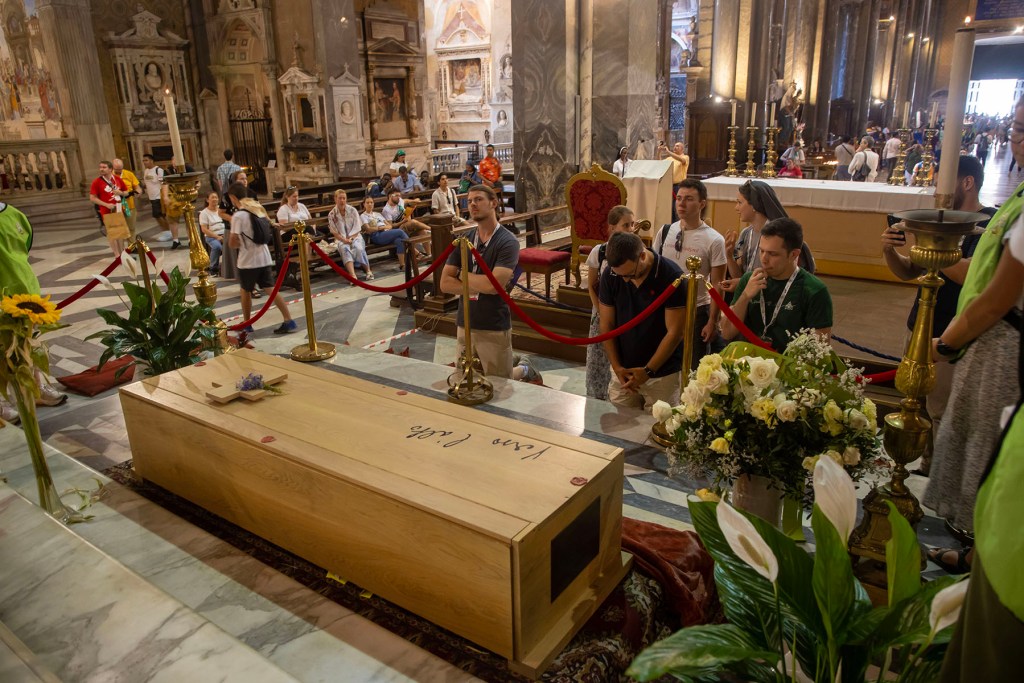
FROM FUNERAL PROCESSION TO CANONIZATION: A century-long journey of Pier Giorgio Frassati’s Sainthood
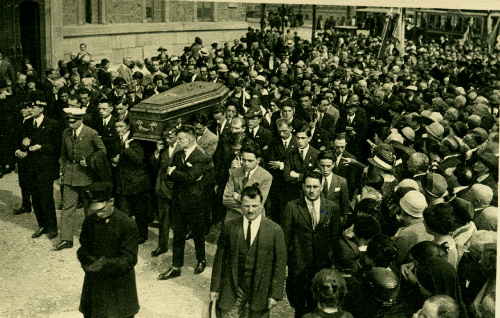
On September 7, 2025, the Church will bring to a close a journey that has spanned a full century—the canonization of Pier Giorgio Frassati. This road began on July 6, 1925, the day of his funeral, when an immense and unexpected crowd gathered in Turin. They came from all walks of life, not merely because of the Frassati family’s prominence, but because of the young man’s own reputation for deep faith and vibrant Christian living, forged in just 24 years.
A Life Immersed in the Church
Pier Giorgio was an active member of numerous Catholic groups, most notably the Italian Federation of Catholic University Students (FUCI) and the Catholic Youth movement. The latter, with its threefold motto—Prayer, Action, Sacrifice—captured his heart and became the setting for his most ardent service.
When he died, his passing left a deep impression on Turin’s Catholic Youth. The public mourning and spontaneous tributes were extraordinary for that time, especially given that death from illness was not unusual. The Catholic press quickly began telling his story, and Don Antonio Cojazzi, encouraged by Archbishop Cardinal Giuseppe Gamba, started gathering testimonies. By the very next day, the Turin Catholic community had established the Pier Giorgio Frassati Colony to promote his charitable spirit.
The Growth of a Legacy
Interest in Frassati spread quickly. By the end of 1925, Catholic Youth clubs were being named after him, children were being given his name, and requests for his photograph were pouring in. In 1927, the Vatican newspaper L’Osservatore Romano published an article titled In the Name of a Young Man, furthering his recognition.
Cojazzi’s biography of Frassati, published in 1928, became a phenomenon—selling 75,000 copies in its first nine years and translated into sixteen languages. By 1929, just four years after his death, Italy boasted around one hundred youth associations in his name, a number that would eventually grow to more than six hundred. Countless individuals testified to conversions and spiritual awakenings through his intercession—stories of lapsed Catholics returning to the sacraments, young women dedicating themselves to charity, and even a priest turning back from the brink of apostasy.
Opening the Cause for Sainthood
In December 1931, the Archbishop of Turin announced the opening of the diocesan investigation into Frassati’s life and virtues. The process began in earnest in July 1932 and moved to the Vatican’s Sacred Congregation of Rites in 1935. Progress was steady until the early 1940s, when slander and doubts prompted supplementary trials. Pope Pius XII eventually issued a non expedire in 1945, halting the cause for decades.
Revival Under Paul VI
It was not until the pontificate of Pope Paul VI—who had known Frassati personally during his years as a FUCI chaplain—that the cause was revived. On January 21, 1977, the Congregation announced it would move forward, with Catholic Action of Italy as petitioner and Jesuit Fr. Paolo Molinari as postulator. After careful examination, Pier Giorgio was declared Venerable on October 23, 1987.
The First Miracle and Beatification
The postulators sifted through more than three thousand reports of favors received through Frassati’s intercession. They identified a 1933 healing of Domenico Sellan from bone tuberculosis as the miracle needed for beatification. On May 20, 1990, Pope John Paul II proclaimed Pier Giorgio “the man of the Beatitudes” and beatified him in St. Peter’s Square.
The Second Miracle and Canonization
Decades later, the healing of Fr. Juan Manuel Gutierrez, then a seminarian in Los Angeles, from a torn Achilles tendon in 2017 was recognized as the second miracle. Pope Francis—who has often cited his admiration for Frassati—announced his canonization, to take place in September 2025.
When the Church proclaims Pier Giorgio Frassati a saint, it will not merely confer a title; it will affirm what countless faithful around the world already believe. For decades, pilgrims have traced his footsteps in Turin and Pollone, and communities bearing his name have flourished across continents. Now, the “man of the Beatitudes” will be officially honored as a companion and intercessor for the universal Church.
 Frassati Society Philippines